Architectural Record
search
cart
facebook twitter linkedin youtube
  • Sign In
  • Subscribe
  • Sign Out
  • My Account
Architectural Record
  • NEWS
    • Latest News
    • Awards
    • Interviews
    • Obituaries
    • Podcasts
      • Design:Ed Podcast
      • Sponsored Podcasts
  • OPINION
    • Book Reviews / Excerpts
    • Exhibition Reviews
    • Forum
  • EXCLUSIVES
    • Videos
    • Design Vanguard
    • Top 300 Firms
    • Sponsored Content
    • Sponsored eBooks
    • From the Archives
  • CONTINUING ED
    • Editorial Continuing Ed
    • CE Center
    • CE Academies
  • PROJECTS
    • Buildings By Type
    • Reuse & Renovation
    • Museums & Arts Centers
    • Colleges & Universities
    • Multifamily Housing
    • Interiors
    • Lighting
    • Kitchen & Bath
  • HOUSES
    • Record Houses
    • House of the Month
    • Featured Houses
  • PRODUCTS
    • Products by Category
    • Record Products of the Year
    • Latest Products
  • EVENTS
    • Dates & Events
    • Record on the Road
    • Innovation Conference
    • Sustainability in Practice
    • Women In Architecture
    • Webinars
    • Ad Excellence Awards
    • Submit an Event
  • CONNECT
    • Ask RECORD AI
    • Newsletters
    • Contact
    • Advertise
    • Editorial Calendar
    • Store
    • Customer Service
  • SUBMIT
    • Submission Guidelines
    • RECORD Competitions
  • MAGAZINE
    • Subscribe
    • My Account
    • Digital Edition
    • Current Issue
    • Firm Pass
    • Historic Archive
Architectural Technology

Up Periscope and Down Building in Chicago

By Russell Fortmeyer
Up Periscope and Down Building in Chicago

Up Periscope and Down Building in Chicago

Photo © Mark Ballogg
Up Periscope and Down Building in Chicago
Up Periscope and Down Building in Chicago

Up Periscope and Down Building in Chicago

Up Periscope and Down Building in Chicago

Up Periscope and Down Building in Chicago

Up Periscope and Down Building in Chicago

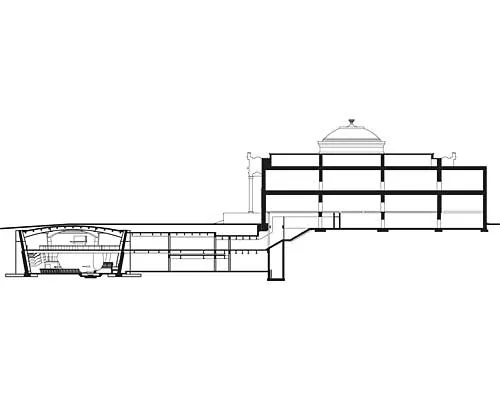
Once lowered into place, contractors installed a steel structure and deck to cover the hall (above), which is 30 feet below Lake Michigan’s water level.

Photo: Courtesy Goettsch Partners
Up Periscope and Down Building in Chicago

Up Periscope and Down Building in Chicago

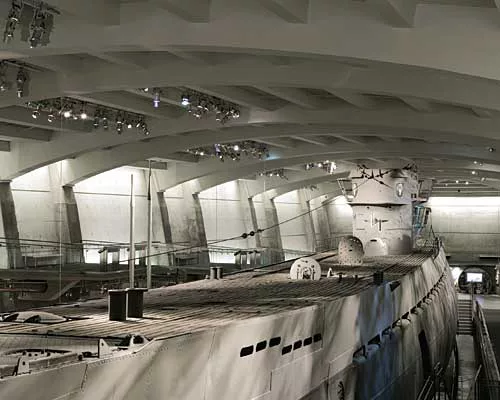
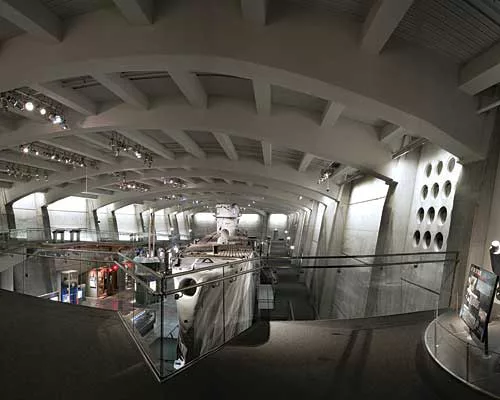
The boxed beams taper from 24 inches at the center to 54 inches at the sides. The canted, cast-in-place concrete walls suggest the space is larger than its 27,000 square feet.

Photo: © Mark Ballogg
Up Periscope and Down Building in Chicago

Up Periscope and Down Building in Chicago

The boxed beams taper from 24 inches at the center to 54 inches at the sides. The canted, cast-in-place concrete walls suggest the space is larger than its 27,000 square feet.

Up Periscope and Down Building in Chicago

Up Periscope and Down Building in Chicago

The boxed beams taper from 24 inches at the center to 54 inches at the sides. The canted, cast-in-place concrete walls suggest the space is larger than its 27,000 square feet.

Photo: © Ion Miller
Up Periscope and Down Building in Chicago

Up Periscope and Down Building in Chicago

The boxed beams taper from 24 inches at the center to 54 inches at the sides. The canted, cast-in-place concrete walls suggest the space is larger than its 27,000 square feet.

Photo: © Ion Miller

Up Periscope and Down Building in Chicago
January 1, 2015
Nearly 100 yards lie between Chicago’s Museum of Science and Industry and Lake Michigan. So when Goettsch Partners began the design of a subterranean hall to exhibit the museum’s German-made U-505 submarine, the architects found themselves in the unlikely—and ironic—position of fighting to keep the lake’s water from submerging the vessel.
 
“It’s possible the lake could rise or we could get a 500-year rain,” says Michael Kaufman, AIA, a partner at Chicago-based Goettsch. “So we have drain tiles around the perimeter and twin sump pumps with diesel generator backup.” Water aside, the land-based journey of the U-505 from the 1944 capture by the Allies off the coast of West Africa to a new basement adjacent to the museum involved a substantial amount of planning.
 
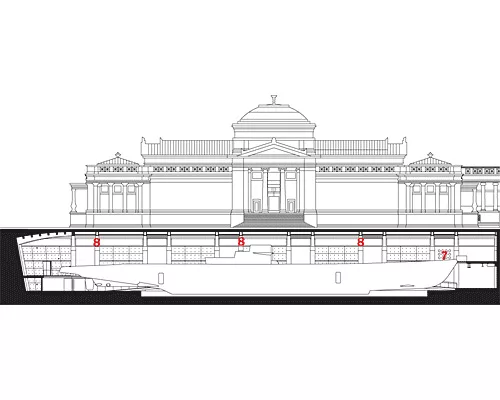
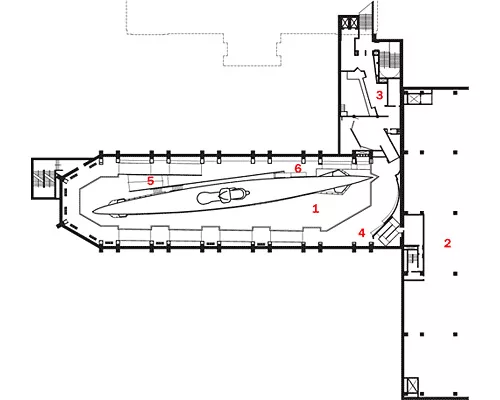
Acquired by the museum in 1954, the 700-ton submarine had for years rested outside, where it had seriously deteriorated. The museum brought Goettsch on board to design the over-40-foot, below-grade exhibition hall and connect it to its original Charles Atwood–designed 1893 building through a nearly 80-foot-long underground hallway (the plaster building was actually reconstructed in stone in 1933). The new splayed, concrete structure, designed to maximize resistance to the compressive forces of the surrounding earth as well as to make the space appear larger, has the feel of a submarine “pen,” which Kaufman says was intentional, since the Germans launched submarines from hidden pens for secrecy.
 
Contractors placed the 270-foot-long sub on 18 sets of dollies before slowly moving it parallel to the new 85-by-315-foot “bathtub” at the museum’s northeast corner. The sub—freshly restored—was then “launched” onto a forest of dense logs constructed inside the future hall. Workers would jack up the sub, remove some logs, and then carefully lower it. Finally, after two weeks, they nestled the U-505 into place on a 16-inch foundation slab. Only then could the contractor install the 85-foot-long tapered-steel box beams and close up the space.
 
The finished hall, kept clean by integrating mechanical systems into the canted walls and placing other services in a mezzanine ceiling, has proved popular with visitors. Kaufman says museum attendance spiked 20 percent in 2006, the first year it opened. Although Kaufman admits he and his staff were motivated in part by their love of the classic 1981 Wolfgang Petersen submarine film Das Boot, the hall conveys anything but a sense of claustrophobia.

Share This Story

Looking for a reprint of this article?
From high-res PDFs to custom plaques, order your copy today!


Russell fortmeyer
Russell Fortmeyer, a contributing editor to RECORD, is a Los Angeles-based sustainability principal at Arup and adjunct professor at the University of Southern California School of Architecture.

Post a comment to this article

Report Abusive Comment

Subscription Center
  • Create an Account
  • Start a Subscription
  • Manage My Account
  • Sign Up for Newsletters
  • Visit Customer Service
  • Update Preferences

More Videos

Sponsored Content

Sponsored Content is a special paid section where industry companies provide high quality, objective, non-commercial content around topics of interest to the Architectural Record audience. All Sponsored Content is supplied by the advertising company and any opinions expressed in this article are those of the author and not necessarily reflect the views of Architectural Record or its parent company, BNP Media. Interested in participating in our Sponsored Content section? Contact your local rep!

close
  • TAMLYN XtremeTrim Exterior Trim
    Sponsored byTamlyn

    Designing Cleaner Panel Facades: Why Exterior Trim Details Matter

  • Building with Vapor Barriers
    Sponsored byReef Industries, Inc.

    Vapor Barriers Help Control Moisture in Tighter Building Designs

  • Duct Interior with Prodeq System
    Sponsored byHenry, a Carlisle Company

    Designing Resilient Water Containment Systems

DESIGN:ED Podcast
Listen to Architectural Record’s DESIGN:ED Podcast

Events

June 16, 2026

Focus on the Façade: Exploring Steel, Timber & Fire-Rated Curtain Walls and Channel Glass Systems

Credits: 1 AIA LU/HSW; 1 AIBD P-CE; 0.1 ICC CEU

Explore modern façade and glazing systems that enhance daylighting, fire safety, and thermal performance while expanding architectural design possibilities.

June 18, 2026

Rebooting the Aging Office Building

Credits: 1 AIA LU/HSW; 1 AIBD P-CE; 0.1 ICC CEU; 1 PDH

Explore façade retrofit strategies and award-winning design concepts that can transform aging office buildings into healthier, higher-performing workplaces for today’s hybrid workforce.

View All Submit An Event

Products

2026 Architect's Square Foot Costbook

2026 Architect's Square Foot Costbook

See More Products

Popular Stories

Coronado Bridge

The Architect’s Guide to San Diego

SanDiegoAirport

Top 300 Architecture Firms of 2026

Crane Cove, ONO

Design Vanguard 2026 Winners

House on a Hill

Design Vanguard 2026: Forma

House A on a Hill

Design Vanguard 2026: Santiago Valdivieso

Focus on the Facade - Free Webinar - June 16, 2026

Related Articles

  • A Green Factory to Crop Up in Chicago

    See More
  • Mass-Timber Exhibition, installation view

    Mass-Timber Exhibition in Chicago Barks Up the Right Tree

    See More
  • Chicago, Making Places

    Making Places: Public Spaces in Chicago

    See More

Related Products

See More Products
  • book3.jpg

    If Architecture is a Language, Then a Building is a Story

See More Products
×

The latest news and information

#1 Source for Architectural Design, News and Products

SUBSCRIBE
  • RESOURCES
    • Advertise
    • Contact Us
    • Submit
    • Store
  • ACCOUNT CENTER
    • Create an Account
    • Start a Subscription
    • Manage My Account
    • Sign Up for Newsletters
    • Visit Customer Service
    • Update Preferences
  • PRIVACY
    • PRIVACY POLICY
    • TERMS & CONDITIONS
    • DO NOT SELL MY PERSONAL INFORMATION
    • PRIVACY REQUEST
    • ACCESSIBILITY
  • SERVICES
    • Marketing Services
    • Reprints
    • Market Research
    • List Rental
    • Survey/Respondent Access
  • STAY CONNECTED
    • Linkedin
    • Facebook
    • Instagram
    • YouTube
    • X (Twitter)

Copyright ©2026. All Rights Reserved BNP Media, Inc. and BNP Media II, LLC.

Design, CMS, Hosting & Web Development :: ePublishing