Architectural Record
search
cart
facebook twitter linkedin youtube
  • Sign In
  • Subscribe
  • Sign Out
  • My Account
Architectural Record
  • NEWS
    • Latest News
    • Awards
    • Interviews
    • Obituaries
    • Podcasts
      • Design:Ed Podcast
      • Sponsored Podcasts
  • OPINION
    • Book Reviews / Excerpts
    • Exhibition Reviews
    • Forum
  • EXCLUSIVES
    • Videos
    • Design Vanguard
    • Top 300 Firms
    • Sponsored Content
    • Sponsored eBooks
    • From the Archives
  • CONTINUING ED
    • Editorial Continuing Ed
    • CE Center
    • CE Academies
  • PROJECTS
    • Buildings By Type
    • Reuse & Renovation
    • Museums & Arts Centers
    • Colleges & Universities
    • Multifamily Housing
    • Interiors
    • Lighting
    • Kitchen & Bath
  • HOUSES
    • Record Houses
    • House of the Month
    • Featured Houses
  • PRODUCTS
    • Products by Category
    • Record Products of the Year
    • Latest Products
  • EVENTS
    • Dates & Events
    • Record on the Road
    • Innovation Conference
    • Sustainability in Practice
    • Women In Architecture
    • Webinars
    • Ad Excellence Awards
    • Submit an Event
  • CONNECT
    • Ask RECORD AI
    • Newsletters
    • Contact
    • Advertise
    • Editorial Calendar
    • Store
    • Customer Service
  • SUBMIT
    • Submission Guidelines
    • RECORD Competitions
  • MAGAZINE
    • Subscribe
    • My Account
    • Digital Edition
    • Current Issue
    • Firm Pass
    • Historic Archive
Architecture News

Jean Nouvel Wins 2008 Pritzker Prize
By James Murdock
Jean Nouvel Wins 2008 Pritzker Prize

Jean Nouvel Wins 2008 Pritzker Prize

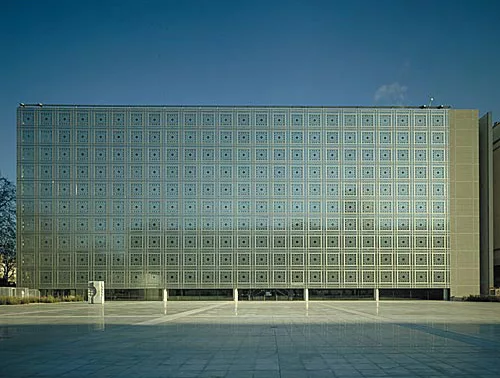
Institut du Monde Arabe (IMA or Arab World Institute), Paris, France, completed in 1987.

Photo by Georges Fessy, courtesy Ateliers Jean Nouvel
Jean Nouvel Wins 2008 Pritzker Prize

Jean Nouvel Wins 2008 Pritzker Prize

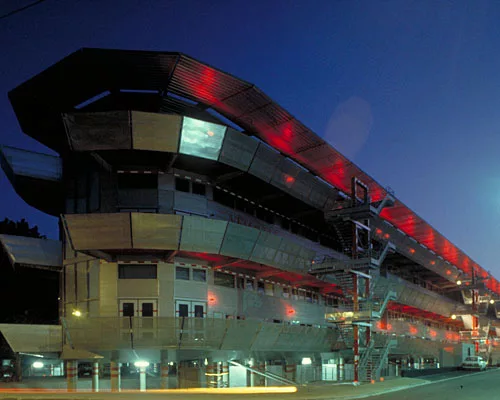
Nemausus I public housing in Nimes, France, completed in 1987.

Photo by Deidi Von Schaewen, courtesy Ateliers Jean Nouvel
Jean Nouvel Wins 2008 Pritzker Prize

Jean Nouvel Wins 2008 Pritzker Prize

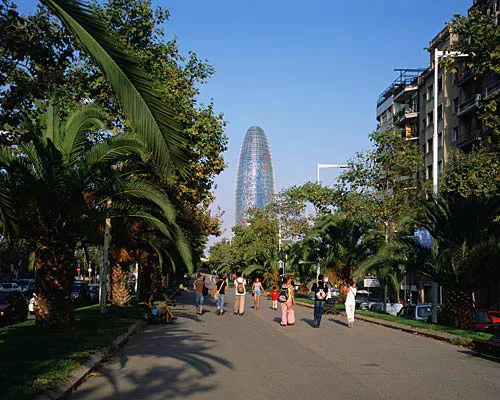
Agbar Tower, Barcelona, Spain, completed in 2005.

Photo by Philippe Ruault, courtesy Ateliers Jean Nouvel
Jean Nouvel Wins 2008 Pritzker Prize

Jean Nouvel Wins 2008 Pritzker Prize

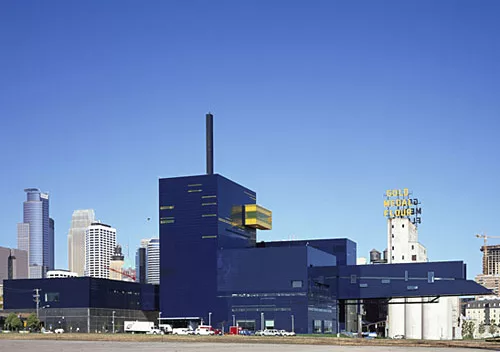
Guthrie Theater Minneapolis, Minnesota, completed in 2006.

Photo by Roland Halbe, courtesy Ateliers Jean Nouvel
Jean Nouvel Wins 2008 Pritzker Prize

Jean Nouvel Wins 2008 Pritzker Prize

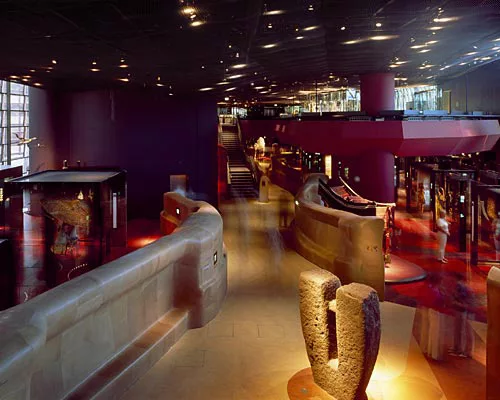
Quai Branly Museum, Paris, France, completed in 2006.

Photo by Roland Halbe, courtesy Ateliers Jean Nouvel
Jean Nouvel Wins 2008 Pritzker Prize

Jean Nouvel Wins 2008 Pritzker Prize

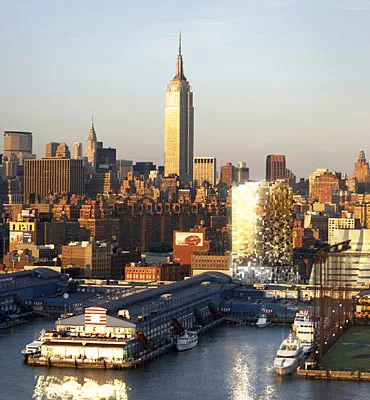
100 11th Avenue, New York, New York, in progress.

Image courtesy Ateliers Jean Nouvel
Jean Nouvel Wins 2008 Pritzker Prize

Jean Nouvel Wins 2008 Pritzker Prize

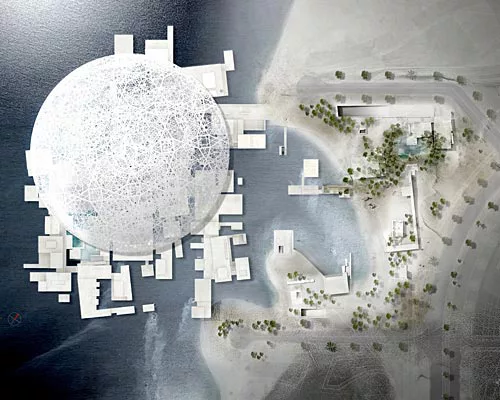
Abu Dhabi Louvre Museum, United Arab Emirates, in progress.

Image courtesy Ateliers Jean Nouvel

Jean Nouvel Wins 2008 Pritzker Prize
March 31, 2008
Jean Nouvel
 
Jean Nouvel has talked of creating buildings that he hopes will disappear into their surroundings, defy easy characterization, and that will become dated. And yet with today’s announcement by The Hyatt Foundation that this 62-year-old Frenchman is the 2008 laureate of the Pritzker Architecture Prize, the profession’s highest honor, Nouvel’s oeuvre is certain to invite close study by many generations to come. In fact, contrary to the architect’s own desire, his buildings already stand out.
 
Many of Nouvel’s more than 200 works are concentrated in France but increasingly they are located around the world. They include a branch of the Louvre Museum at the Saadiyat Cultural District, in Abu Dhabi, expected to open in 2012. It will be covered by a dome-shaped, latticework roof whose filigreed pattern expresses Islamic influences—also evident in Nouvel’s first widely acclaimed building, the Institut du Monde Arabe, opened in Paris in 1987. But any resemblance between it and the Louvre is fleeting. Each of Nouvel’s designs acknowledges a unique context while making use of technologies and materials that are of the moment. If that makes them look dated after a few years, the architect is unconcerned.
 
“It’s impossible to create a timeless building. I cannot imagine doing that,” Nouvel says. “I like it when a building clearly has a date, the moment of its construction. If you do a building now and three centuries later it’s not the same building. Knowledge evolves, techniques also. A city is like a museum and what’s interesting is you can find the thinking and feelings of a generation, the preoccupation of an epoch, within the parade of architecture.”
 
This era, Nouvel believes, is preoccupied with the relationship of light and matter, and how one renders the other invisible. “The paradigm of modern architecture is simplicity and complexity: the more it seems simple, the more it’s complex,” he explains. “The best engineer a few decades ago was someone who could create the most beautiful beam or structure; today it’s to do a structure you cannot see or understand how it’s done. It disappears and you can talk only about color, symbols, and light. It’s an aesthetic of miracle.”
 
Nouvel hopes that his structures will disappear through a trick of the light, and he likewise creates buildings that evade easy characterization in terms of their typology, such as the Musée du Quai Branly. This Parisian museum, opened in 2006, exhibits non-Western art and artifacts. Resin-clad gallery volumes cantilever from the north facade, while the northwest corner is covered in an 8,600-square-foot vertical garden.
 
Designing buildings that are a pastiche, like Quai Branly, is Nouvel’s reaction against his training at the École des Beaux-Arts during the 1960s, when the International Style predominated. “You always had to do the same project with the same recipes, completely independent of the site and program,” he says. “I was interested by specificities.”
 
One of Nouvel’s current sites in New York City supplies so many specifics that it would almost seem daunting. In the Chelsea district—an architectural laboratory that includes structures by Shigeru Ban, Neil Denari, and Annabelle Selldorf, among others—he has designed 100 11th Avenue, a 72-unit luxury condominium tower located adjacent to a women’s jail and a state highway, and across the street from Frank Gehry’s iconic InterActiveCorp headquarters. Looking beyond this freighted urban context, Nouvel was instead struck by the site’s views of the Hudson River and the light it receives at sunset.
 
“It’s clearly a game with the nature of light and how to catch sparkles of light, a little bit like an eye of an insect,” he says of the south- and west-facing facades, composed of more than 1,700 differently-shaped glass panes attached to a steel frame at varied angles. “It’s a very special building for this exactly spot.”
 
Nouvel’s other U.S. projects are also mainly residential, although he first attracted notice here in 2006 with the Guthrie Theater: a striking composition of pure geometric forms and bold colors located along the Mississippi riverfront in Minneapolis. Upcoming buildings include a sustainable Modernist condo tower in Los Angeles’s Century City neighborhood. Los Angeles Times critic Christopher Hawthorne hailed its slender profile, which allows full daylighting throughout all residences, and hydroponic gardens as a contemporary reinvention of the United Nations headquarters. Nouvel is also designing a 75-story, glass and steel condo tower in midtown Manhattan. Rising more than 1,000 feet, it could become the tallest residential building in New York—unquestionably a stand out, regardless of what the architect’s hopes for it might be.
 
Nouvel is the second French citizen to receive the Pritzker after Christian de Portzamparc in 1994. Serving on this year’s jury were: The Lord Palumbo, trustee chairman of the Serpentine Gallery, in London; the Japanese architect Shigeru Ban; Vitra board chairman Rolf Fehlbaum; Carlos Jimenez, an architect and professor at the Rice University School of Architecture; architectural historian and author Victoria Newhouse; the 1998 Pritzker laureate, Renzo Piano; and Karen Stein, a design writer and former RECORD senior editor.
 
The Pritzker, first awarded in 1979, is given to a living architect and carries with it a $100,000 grant and a bronze medallion. This year’s honor will be bestowed during a ceremony on June 2 at the Thomas Jefferson Building of the Library of Congress, in Washington, D.C.
KEYWORDS: Jean Nouvel Pritzker Prize

Share This Story

Looking for a reprint of this article?
From high-res PDFs to custom plaques, order your copy today!
Post a comment to this article

Report Abusive Comment

Subscription Center
  • Create an Account
  • Start a Subscription
  • Manage My Account
  • Sign Up for Newsletters
  • Visit Customer Service
  • Update Preferences

More Videos

Sponsored Content

Sponsored Content is a special paid section where industry companies provide high quality, objective, non-commercial content around topics of interest to the Architectural Record audience. All Sponsored Content is supplied by the advertising company and any opinions expressed in this article are those of the author and not necessarily reflect the views of Architectural Record or its parent company, BNP Media. Interested in participating in our Sponsored Content section? Contact your local rep!

close
  • TAMLYN XtremeTrim Exterior Trim
    Sponsored byTamlyn

    Designing Cleaner Panel Facades: Why Exterior Trim Details Matter

  • Building with Vapor Barriers
    Sponsored byReef Industries, Inc.

    Vapor Barriers Help Control Moisture in Tighter Building Designs

  • Duct Interior with Prodeq System
    Sponsored byHenry, a Carlisle Company

    Designing Resilient Water Containment Systems

DESIGN:ED Podcast
Listen to Architectural Record’s DESIGN:ED Podcast

Events

June 10, 2026

Rethinking Stormwater – The Power of Porous Paving

Credits: 1 AIA LU/HSW; 1 AIBD P-CE; 0.1 ICC CEU

Learn how porous paving systems support stormwater management, reduce heat island effects, and enhance sustainable site design performance.

June 11, 2026

Very Early Warning Fire Detection for Mission-Critical Facilities

Credits: 1 AIA LU/HSW; 1 AIBD P-CE; 0.1 ICC CEU

Examine advanced fire detection strategies that support uptime and enhance safety in data centers and other mission-critical facilities.

View All Submit An Event

Products

2026 Architect's Square Foot Costbook

2026 Architect's Square Foot Costbook

See More Products

Popular Stories

Practice Matters illustration

What’s in a (Firm’s) Name? Thinking About Succession and Legacy

Coronado Bridge

The Architect’s Guide to San Diego

Practice Matters illustration

By the Numbers: Counting America's Architects

House on a Hill

Design Vanguard 2026: Forma

Crane Cove, ONO

Design Vanguard 2026 Winners

Broader Sustainability of CMU - Free Webinar - May 21, 2026

Related Articles

  • Peter Zumthor

    Peter Zumthor Wins 2009 Pritzker Prize

    See More
  • Chinese Architect Wang Shu Wins the 2012 Pritzker Prize

    See More
  • Frei Otto Wins 2015 Pritzker Prize

    See More
×

The latest news and information

#1 Source for Architectural Design, News and Products

SUBSCRIBE
  • RESOURCES
    • Advertise
    • Contact Us
    • Submit
    • Store
  • ACCOUNT CENTER
    • Create an Account
    • Start a Subscription
    • Manage My Account
    • Sign Up for Newsletters
    • Visit Customer Service
    • Update Preferences
  • PRIVACY
    • PRIVACY POLICY
    • TERMS & CONDITIONS
    • DO NOT SELL MY PERSONAL INFORMATION
    • PRIVACY REQUEST
    • ACCESSIBILITY
  • SERVICES
    • Marketing Services
    • Reprints
    • Market Research
    • List Rental
    • Survey/Respondent Access
  • STAY CONNECTED
    • Linkedin
    • Facebook
    • Instagram
    • YouTube
    • X (Twitter)

Copyright ©2026. All Rights Reserved BNP Media, Inc. and BNP Media II, LLC.

Design, CMS, Hosting & Web Development :: ePublishing